Editorial Directory 2026

A beautiful view, a simpler afternoon

We look past dramatic vantage points that demand alpine expeditions or heavy carries, favoring reachable shorelines, sunny grass saddles, and quiet paths where carrying a thermos and a loaf of crusty bread feels like an unhurried pleasure.

01

Choose the feeling — introduction

The balance of travel, weight, and quiet

Too often, modern travel guides mistake the most arduous summit for the finest resting spot. In truth, an exceptional picnic requires ease: dry ground where your wool rug does not wick cold soil, a sheltering stone dyke or copse of beech trees to temper the breeze, and an approach walk gentle enough that fruit remains unbruised and cheese unmelted.

Whether sitting beside glacial ripple-lines at Lake Annecy, looking out over the Val d'Orcia from a cypress knoll, or watching swifts carve the evening sky from a low bench in the Lake District, our recommendations balance landscape grandeur with practical comfort.

02

Beside still water — lake preview

Fresh breezes, pebble shelves, and flat surfaces
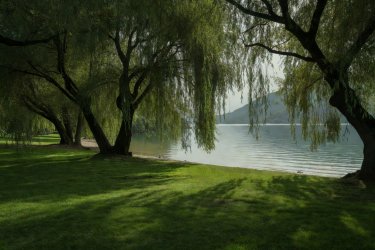
Shaded grassy shore beneath weeping willows at Talloires on Lake Annecy France • Haute-Savoie

Talloires Grass Benches, Lake Annecy

Lake Annecy Eastern Shore

Just south of the priory, small lawns slope smoothly into crystal-clear turquoise waters. The Dents de Lanfon rise opposite, throwing crisp afternoon shadows across the water while the turf remains dry and level.

  • Approach Walk: 5 minutes from village parking
  • Ground Type: Soft tended grass & limestone piers
  • Ideal Season: Late May through September
Read Lakeside Guide
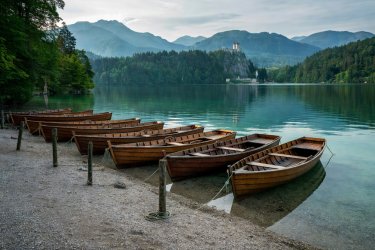
Quiet gravel cove with wooden rowboats on Lake Bled Slovenia • Julian Alps

Mlino Bay Shoreline, Lake Bled

Southern bay of Lake Bled

Far quieter than the bustling promenade along the north shore, Mlino offers weeping willow canopies and flat stone steps facing the island church without relentless foot traffic.

  • Approach Walk: 8 minutes along perimeter trail
  • Ground Type: Shaded fine gravel & timber benches
  • Ideal Season: April to October
Read Lakeside Guide
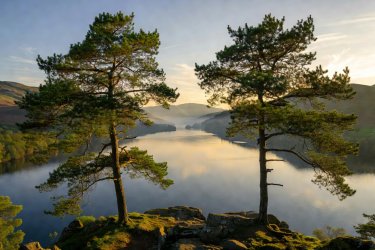
Scotch pines framing the waters of Derwentwater at Friar's Crag United Kingdom • Cumbria

Friar's Crag & Calfclose Bay

Derwentwater, Lake District

Gnarled Scots pine roots form natural armchairs looking south into Borrowdale. When the Crag bench is taken, the gentle shingle at Calfclose Bay offers secluded driftwood seating.

  • Approach Walk: 15 minutes from Keswick foreshore
  • Ground Type: Pine-needle carpet & smooth shingle
  • Ideal Season: Year-round; crisp autumns
Read Lakeside Guide
03

Above the everyday — mountain preview

Elevation without technical strain
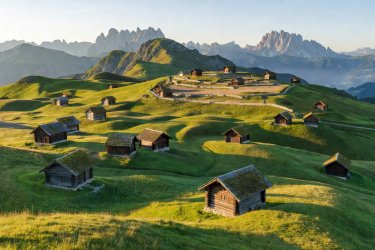
Vast undulating green plateau of Alpe di Siusi with wooden hay huts Italy • South Tyrol

Compaccio Knolls, Alpe di Siusi

Dolomites High Meadow

Europe's largest high-altitude Alpine meadow lets day-trippers step off the cableway onto cushioned alpine fescue, gazing across the dramatic spires of the Sassolungo without steep scree climbs.

  • Access: Siusi-Seis gondola lift then 10 min stroll
  • Elevation: 1,850 m above sea level
  • Wind Shelter: Rolling pasture hollows
Read Mountain Guide
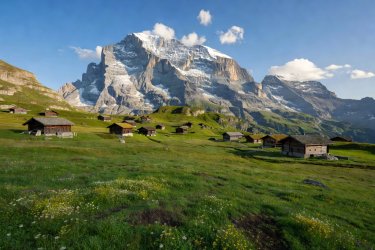
Alpine pasture facing the north face of the Eiger near Grindelwald Switzerland • Bernese Oberland

Bort Meadows beneath the Wetterhorn

Grindelwald Valley

Stepping off the First cableway at intermediate station Bort reveals gentle terraced hayfields crisscrossed by mountain brooks, with direct front-row perspectives of the massive Upper Grindelwald Glacier.

  • Access: First gondola middle tier
  • Elevation: 1,570 m
  • Wind Shelter: Pine clusters & chalet walls
Read Mountain Guide
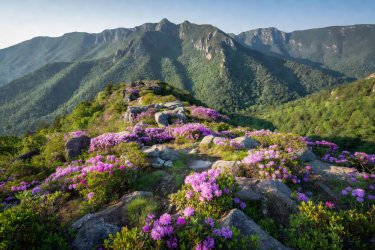
Rocky overlook carpeted with wild rhododendron in the Blue Ridge Mountains USA • North Carolina

Craggy Pinnacle Picnic Gap

Blue Ridge Parkway Milepost 364

Cool mountain breezes and ancient heath balds frame layered blue ridges stretching into Tennessee. The lower stone tables offer sheltered lunching beneath dense rhododendron umbrellas.

  • Access: Parkway parking turnout
  • Elevation: 1,600 m
  • Wind Shelter: Stone picnic shelter & thickets
Read Mountain Guide
04

Away from the crowds — hidden-nature preview

Ancient woodlands, dry sand clearings, and orchard hedgerows

Some of the world's most grounding meals occur inside unassuming botanical refuges: the mossy beech groves of England's New Forest where wild ponies graze twenty paces away, the sandstone glades of Fontainebleau forest near Paris where pale sand forms an indoor-soft carpet underfoot, or the olive terraces of Banyalbufar on Mallorca's west coast.

Explore Quiet Nature Escapes
05 Practical Guidance

Pack for the place — practical guidance

A memorable picnic relies more on thoughtful packing than on lavish hampers. Heavy porcelain breaks, mayonnaise wilts under midday warmth, and plastic cutlery snaps against aged gouda.

Lakeside Protocol

Moisture rises swiftly near fresh water. Always place an oilcloth or waxed canvas ground sheet beneath your wool throw. Seal crumbs immediately to prevent ducks and gulls from encircling your blanket.

Altitude Considerations

Temperature drops roughly 6.5°C per 1,000 meters of elevation. Pack insulated food flasks for warm broth or tea, and select dense rye breads and hard mountain cheeses that do not crush inside rucksacks.

Forest Etiquette

Dry pine needles and sandy loam make comfortable natural rugs, but fallen branches may hide insects and sap. Pack a small folding foam sit-pad and keep food containers tightly secured against curious field mice.

06

Leave it lovely — responsible-use notes

Leaving quiet spots better than we found them

Every pristine meadow and tranquil cove exists because generations of visitors exercised restraint. We advocate an unconditional "Leave No Trace" standard across all featured spots:

  • Pack out every peel: Orange rinds, apple cores, and banana skins take months or even years to decompose in cold mountain soils and can harm native wildlife.
  • No open flames: Wildfire risks are acute across Alpine valleys and Mediterranean scrubs. Use pre-boiled thermoses rather than portable camp stoves unless dedicated stone pits are provided.
  • Quiet observation: Avoid portable speakers or loudspeakers. Natural wind rustling through reeds and birdsong are essential parts of the scenery.
  • Stay to compacted paths: Fragile alpine flora takes decades to recover from repetitive foot compression.

Looking for Specific Details?

Discover our complete reference directory covering public access laws, water safety, packing inventories, and seasonal notes across Europe and North America.

Review Our FAQ Reference